
Forty years on the fast track: Adelaide’s O-Bahn turns 40
Monday 2 March 2026
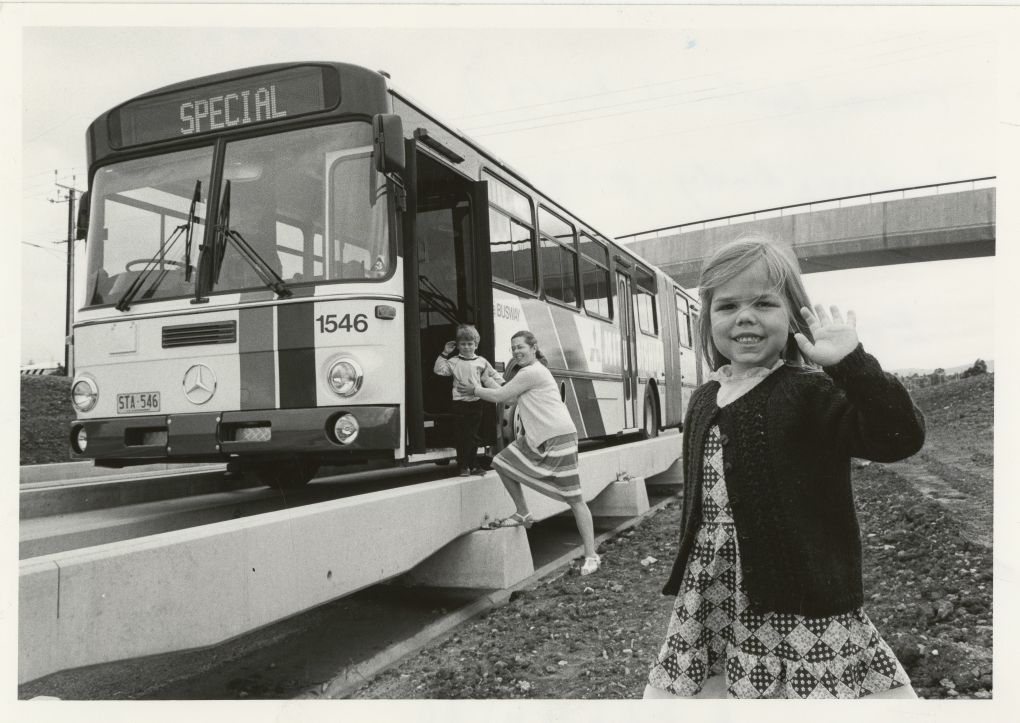
When the first articulated Mercedes-Benz O305 bus glided onto the brand-new O-Bahn track on 9 March 1986, Adelaide’s daily commute was transformed forever.
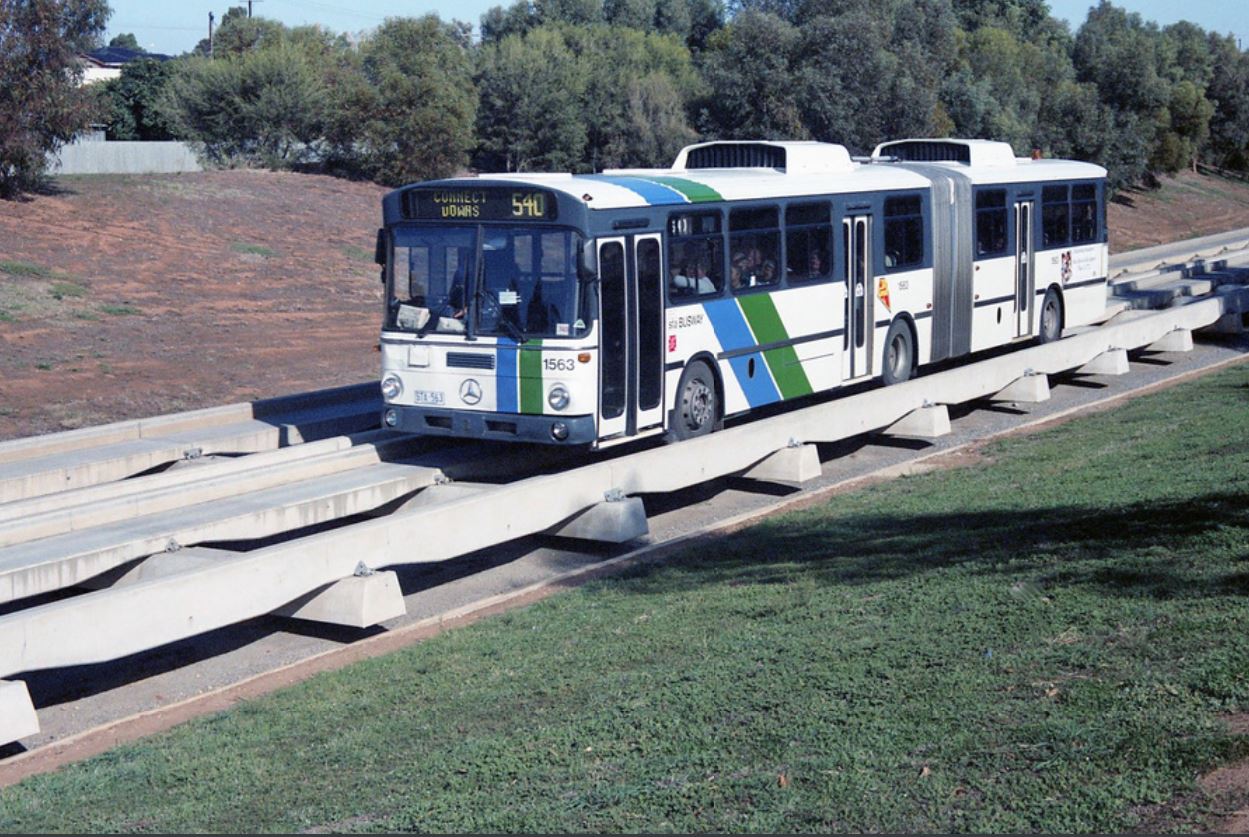
As Adelaide Metro this week celebrates the 40th anniversary of the state’s most iconic and successful public transport system, we look back at how it came to be.
Billed at the time as ‘the fastest bus in the world’, the O-Bahn Busway represented an ambitious leap into a new era of public transport. The O-Bahn wasn’t just a transport project; it was the resolution to decades of debate about how best to connect the fast-growing north-eastern suburbs.
Proposals for a light rail line along the River Torrens faced community resistance, with many asking for a quieter, more efficient alternative. The solution emerged in the German city of Essen – a guided busway system combining the benefits of rail with the flexibility of buses.
The name ‘O-Bahn’ comes from the German words omnibus (bus) and bahn (path). It was named after the system developed in Germany and used as Adelaide’s blueprint.
Adelaide’s O-Bahn would become the second modern guided busway system in the world, behind only the system that opened in Essen in 1980. Today, four guided busway systems are in operation: Essen, Adelaide, Nagoya and Cambridgeshire.
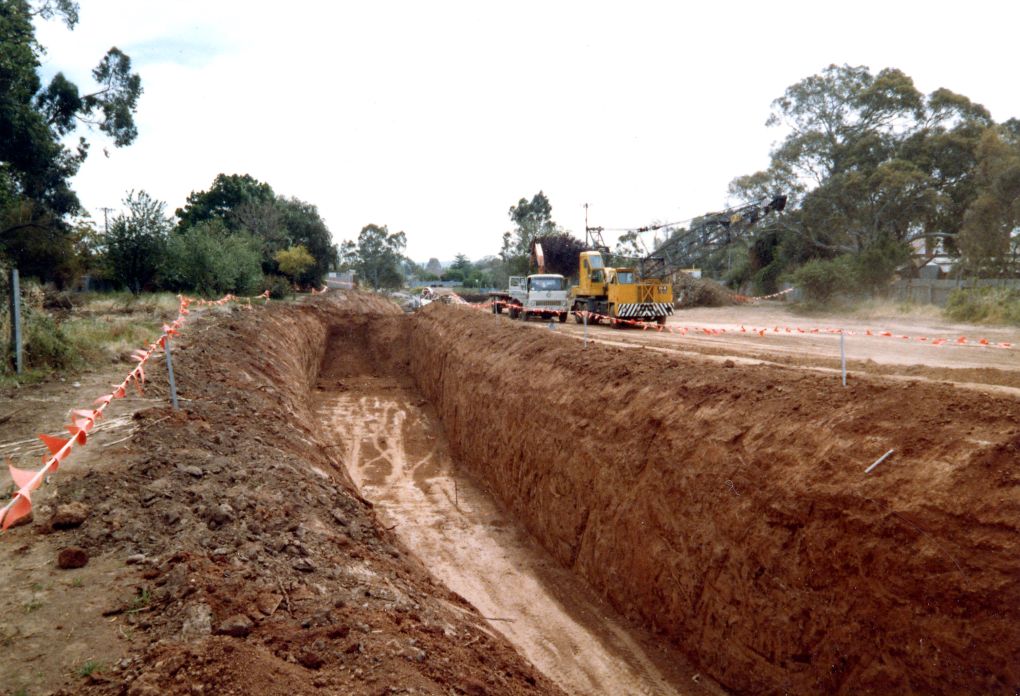
Construction began in 1983 for the first section from the city to Paradise via Klemzig. It was opened in 1986, followed by the extension to Tea Tree Plaza three years later in 1989. 30 new bridges were constructed along the 12-kilometre route.
O-Bahn being built
At the time, the O-Bahn revolutionised travel into the city, cutting travel times almost in half for more than four million passenger trips a year.
The third and final stage of the O‑Bahn was completed in 2017 with an extension of the system, including a new 670-metre tunnel, from the end of the busway at Gilberton into the city, providing quicker more reliable access for buses into the city.
It meant the first guided busway in the southern hemisphere could now take passengers the 15 kilometres from Tea Tree Plaza via Paradise and Klemzig, to the city centre in under 20 minutes. Patronage grew by just over five per cent when the tunnel opened.
The first buses to enter service on the O-Bahn were rigid and articulated Mercedes-Benz O305s, later replaced by Scania buses that make up the 188-fleet today.
O-Bahn opened
Park n Rides provide around 2,250 car spaces in total across the three interchanges, which are served by 26 bus routes altogether.
Forty years later, the O-Bahn is Adelaide’s most used public transport corridor, averaging nearly 30,000 validations every day. It supports 892 services each weekday with 9,751,846 total validations recorded in 2025.
On average, between peak hours of 7am and 9am there is a bus heading towards the city every minute on the O-Bahn.
Officially considered a road, the O-Bahn’s legacy extends well beyond speed and statistics. Its construction led to the transformation of the Torrens Linear Park into a cherished green corridor used by cyclists, walkers and families every day.
The big milestone has not gone unnoticed. The Bus Preservation Association of South Australia will run a special anniversary tour this weekend, featuring historic O-Bahn buses retracing their original routes and celebrating the engineering, community and innovation that defines this uniquely South Australian icon.
From its ingeniously simple express services to its distinctive guide wheels, the O-Bahn has become part of Adelaide’s cultural fabric – every bit as characteristically local as smiley fritz and Stobie poles.
Today, as it turns 40, it stands a testament to bold planning decisions, engineering ingenuity, and the enduring value of fast, reliable, efficient public transport.
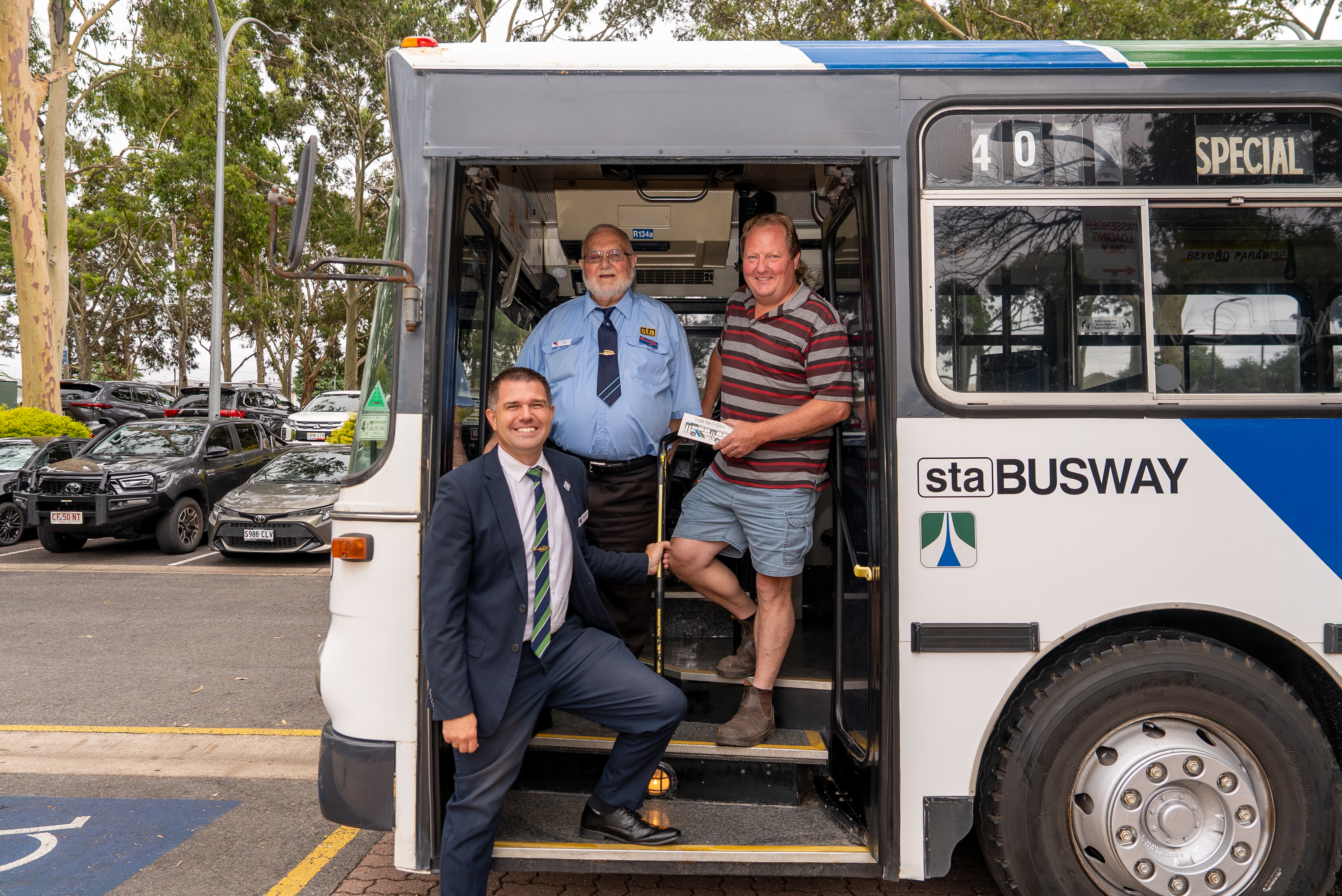
Quotes attributable to Chief Executive Jon Whelan:
The O‑Bahn continues to deliver fast, reliable services for tens of thousands of South Australians every day. Forty years on, it still stands as one of Adelaide’s greatest transport success stories.
As the O‑Bahn marks its 40th birthday, Adelaide Metro acknowledges the engineers, planners, drivers, and community members who helped shape the system into the uniquely Adelaide icon it is today.
Quotes attributable to former project engineer Mark Elford:
The O-Bahn project was a unique opportunity for a young engineer- it was a project that was ahead of its time.
One of the unique aspects was the design and construction of the concrete track. Because of the very expansive soil conditions, extensive foundations were required to make sure the guided track was stable and safe.
We’re talking thousands of sleepers and piles to make sure it would stand the test of time. It required extensive engineering, investigations and design which proved to be worth it with the success the O-Bahn has seen ever since.
We had lots of contractors, from overseas and locally, working on the corridor. The scale of what we were building had never been done before, with the German busway far smaller than ours, and the German engineers provided a lot of input and advice.
It was certainly a courageous decision at the time, but I remember people were really looking forward to having a public transport solution for the north east – and that’s exactly what we were able to provide.
The corridor was landscaped like we had never really done on an infrastructure project before and it became what we know as the beautiful Torrens Linear Park trail now.
Quotes attributable to original O-Bahn bus driver Roy Platt:
The O-Bahn is a marvellous piece of engineering and has become a South Australian icon.
It was an interesting experience to be one of the first O-Bahn drivers, it was nerve-racking because we had never experienced anything like it before.
It now transports thousands of passengers, people know they can get to town easy and cheap.
Quotes attributable to Bus Preservation Association of South Australia’s Micheal Pretty:
Growing up catching the O-Bahn to high school and to Tea Tree Plaza was really exciting because it was such a unique experience.
In 2012 when the opportunity came about to purchase an original O-Bahn bus I jumped at the opportunity, it was the first one to ever be preserved in Adelaide.
The Bus Preservation Association South Australia and its members are thrilled to still be enjoying the O-Bahn 40 years on.