
Green Triangle Freight Action Plan
The Green Triangle Freight Action Plan supports an optimal forestry supply chain across the Green Triangle region. The plan aims to improve efficiency and safety, reduce operating costs and support access to new and existing markets.
About the latest plan
The 2026 plan sets clear priorities for the infrastructure and policy actions needed to keep freight moving efficiently within and beyond the Green Triangle.
The refresh:
- builds on the productivity improvements made since 2016
- tackles current pressure points
- helps the region prepare for future growth.
South Australia and Victoria developed the plan jointly, working with local governments and industry.
The plan will provide strong evidence to guide transport investment and regulatory decisions. This will help the region to manage growing freight demand.
Key focus areas
- Expand access for high-productivity vehicles.
- Strengthen connections to markets, production sites and logistics hubs.
- Continue to improve road safety across the network.
Plan objectives
The plan aims to achieve three objectives and outlines how they will be delivered.
Prioritise future investment
Clearly identify the region’s most important freight needs and opportunities. This will help guide planning and future business cases.
Support consistent, coordinated action across both states
Provide clear guidance for government agencies and industry.
Encourage innovation
Identify regulatory reforms and technologies that can improve productivity and strengthen supply chain management in the timber industry.
About the Green Triangle
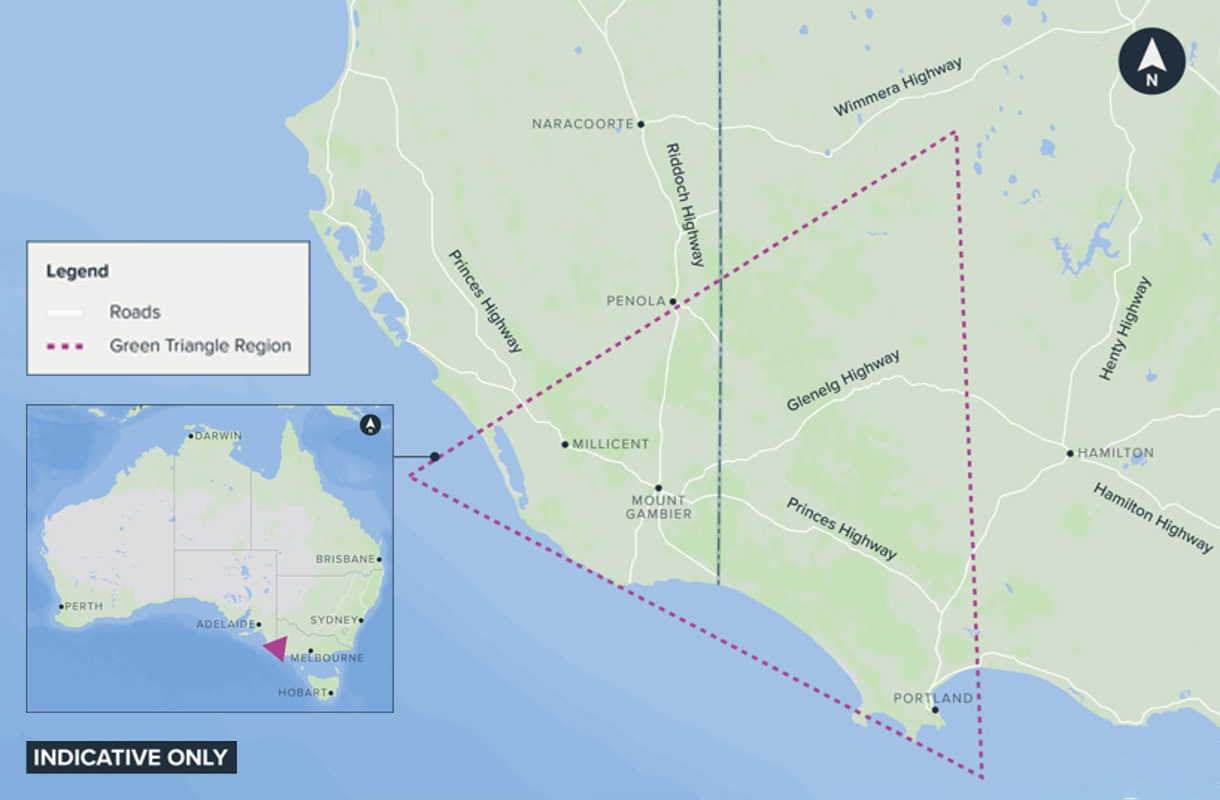
The Green Triangle region spans the border between South Australia and Victoria. It covers over six million hectares across four local government areas.
The region is one of Australia’s major forestry regions. It has a large plantation area of both softwood and hardwood.
Forestry is a key part of the local economy and a major contributor to the national economy. The region has an established industry that produces softwood, sawn timber, wood panels and wood chips for export.
Why the plan is needed
The Green Triangle region has a large network of Commonwealth, state and local roads. These roads have been developed over time to support agriculture, forestry, and local and tourist travel.
Freight traffic in the region has grown substantially in recent years. This is due to expanding industries such as forestry, agriculture, wind farms, mineral sands and dairy production. A more efficient freight network will bring economic and social benefits to the region.
Freight volumes in the region are expected to keep growing. Key freight routes need investment to meet future demand and stay fit for purpose.
These upgrades will help maintain the capacity, safety and efficiency needed to support future freight movements.
Consultation
Stakeholders across the Green Triangle were consulted about current and future freight network needs and priorities.
This included stakeholders from both South Australia and Victoria, such as:
- local government authorities
- Regional Development Australia
- industry representatives
- forestry and plantation managers
- freight operators
- Port of Portland
- the two cross border commissioners
- other key regional stakeholders.
The consultation helped identify the key transport corridors used to move timber and other freight products across the Green Triangle.
Feedback is helping to shape future infrastructure and policy priorities. These priorities will help meet the region's future freight needs and support long-term economic growth.
Read the 2026 plan
-
 Download the latest Green Triangle Freight Action Plan (PDF, 4.6 MB)
.